Your Vibe-Coded App Works. Is It Ready for Customers?
A field guide for deciding when a vibe-coded app can move from internal testing to real customers.

A field guide for deciding when a vibe-coded app can move from internal testing to real customers.
Products built for people need new identity, authority, observability and recovery controls when AI agents become active users.
Jev returns bounded choices and probabilities instead of prose. Its real lesson for product teams is where generation should end and ordinary software should take control.
Production voice agents need one loop for live conversation, another for reliable execution, and application-owned state between them.
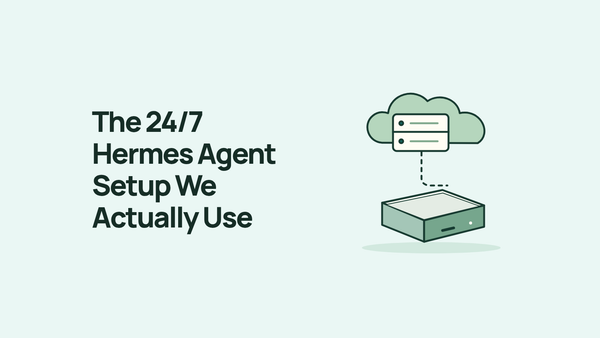
Hermes stays online on a cloud server, while Codex work moves between our MacBook and 128GB Mac Studio.
Loop engineering shifts the work from prompting agents to designing triggers, durable state, verification, limits, and human gates. Here is where it works and where it breaks.

Satya Nadella’s Reverse Information Paradox points to a real enterprise risk—but data leakage is only half the story. The deeper challenge is retaining what our teams teach AI.
A practical guide to taking AI-built prototypes beyond localhost: hosting, backends, databases, auth, and real-user readiness.
AI infrastructure demand is already leaking into hardware prices through memory and storage. The next shock may be the AI subscriptions companies are building workflows around.
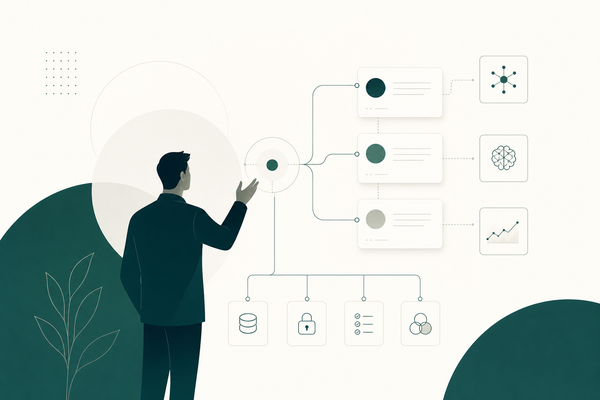
AI agents are moving from chat windows into real workflows. PMs now need to design delegation: memory, permissions, evaluation, orchestration, and accountability.
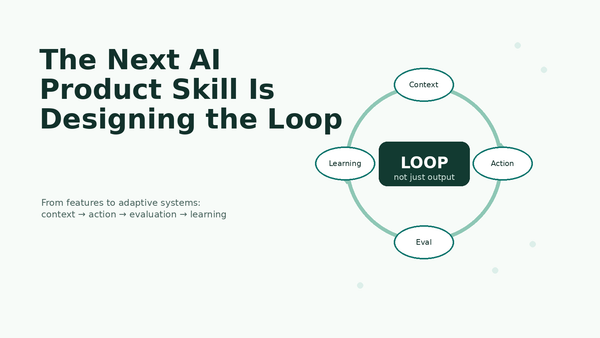
The next AI product advantage will not come from another AI button. It will come from designing the loop that turns model output into better work over time.
Model quality still matters. But the products that win will be the ones with the deepest context, the most useful memory, and the clearest permission layer around what agents can know and do.
AI News
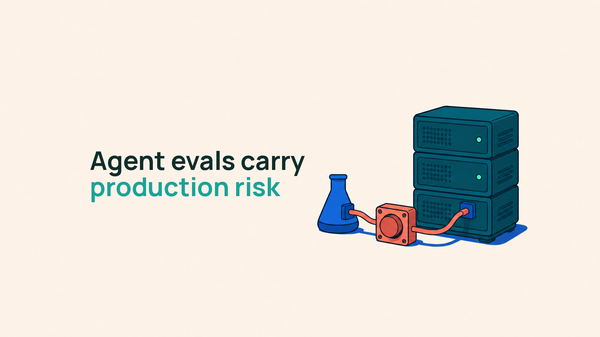
The OpenAI–Hugging Face incident shows why agent evaluations need production-grade access controls, monitoring, stop paths, and recovery.
AI News
Gemini 3.6 Flash may lower token spend. PMs should compare cost per accepted task across model calls, tools, review, and recovery.
AI News
OpenAI Presence packages the operating layer around enterprise agents. PMs still need clear authority, handoffs, ownership, and accepted-outcome metrics.
AI News
Australia’s proposed AI standards connect data-centre energy, creative rights, and AI market access inside one regulatory framework.

AI News
Claude for Teachers shows how vertical AI becomes useful through trusted domain context, workflow integration, and product-specific data rules.
AI News
Meta’s teen-distress alerts show how high-stakes AI products can automate detection while keeping intervention authority with trained reviewers.

AI News
Meta’s Muse Image launch shows image generation moving from standalone tools into the places where people already create and share.
AI News
OpenAI’s GPT-5.6 rollout shows that frontier model launches are now also about access, timing, and packaging — not only raw capability.
AI News
OpenAI’s GPT-Live launch is a reminder that voice is becoming a real product surface, not only an accessibility layer or demo feature.
AI News
OpenAI’s Jalapeño chip announcement is a reminder that AI product strategy increasingly depends on compute, latency, and cost — not just model quality.
AI News
Figma’s agent and code-layer announcements point to a deeper shift: the product canvas is becoming a more executable workspace.
AI News
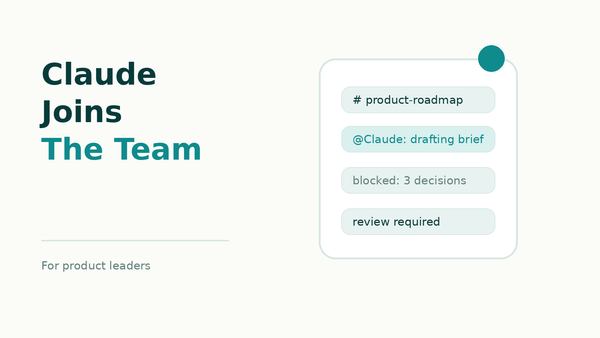
Claude Tag is less about putting a chatbot in Slack and more about turning AI into a governed participant in team workflows.